
Hospitals
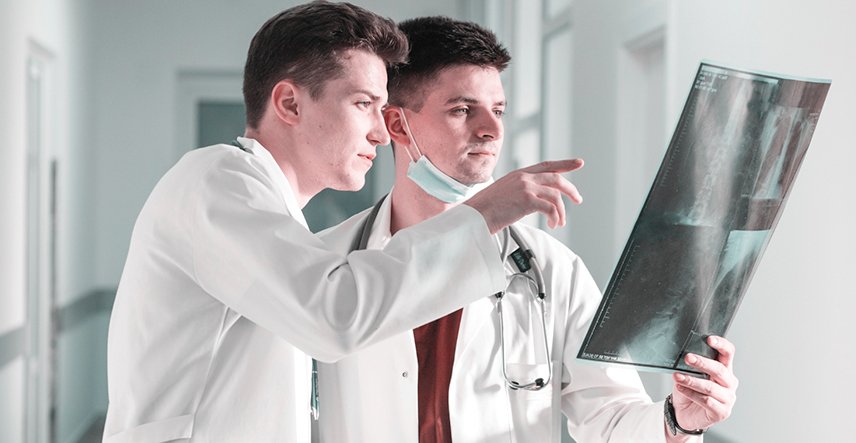
Integrated Wastewater Management for Healthcare Facilities
Hospitals and healthcare facilities generate two distinct types of wastewaters—domestic sewage from patient rooms, staff areas, washrooms, kitchens, and administrative facilities, and healthcare effluent from laboratories, dialysis units, CSSD, pathology, operation theatres, laundries, and other medical services. Each wastewater stream has different characteristics and requires an appropriate treatment process before discharge or reuse.
At Nitya Ensafe, we provide integrated STP (Sewage Treatment Plant) and ETP (Effluent Treatment Plant) solutions designed to ensure regulatory compliance, reliable treatment, effective disinfection, and sustainable water reuse while maintaining a safe and hygienic hospital environment.
Why Hospitals Need STP & ETP
Healthcare wastewater treatment is not just a regulatory requirement—it is a moral responsibility of every healthcare facility. Wastewater generated from patient care areas, urinals, laboratories, blood and body fluids, pathological samples, operation theatres, and other healthcare activities should never be discharged into a common treatment system without proper treatment.
Improper handling and inadequate treatment may increase the risk of environmental contamination and the spread of harmful microorganisms. Healthcare facilities operate 24×7 and consume significant quantities of water every day. Proper wastewater treatment is essential to protect public health, comply with environmental regulations, and support sustainable hospital operations.
An integrated STP & ETP system helps hospitals to:
- Comply with SPCB/CPCB regulations and applicable healthcare wastewater norms.
- Safely treat both domestic sewage and healthcare wastewater.
- Achieve effective pathogen reduction through advanced biological treatment, filtration, and disinfection.
- Support NABH accreditation, Green Hospital initiatives, and sustainable healthcare practices.
- Reuse treated water for flushing, gardening, cooling towers, HVAC, and other utility applications.
- Reduce freshwater consumption and operating costs.
- Protect patients, healthcare workers, surrounding communities, and the environment.
- Minimize environmental impact while ensuring long-term sustainability.
Common Wastewater Challenges
1. Multiple Wastewater Streams
Hospitals generate wastewater from various departments, each with different characteristics. These include:
- Patient wards
- Laboratories
- Dialysis units
- CSSD
- Operation Theatres
- Pathology
- Laundry
- Kitchen & Canteen
- Staff facilities
2. High Organic & Pathogenic Load
Hospital wastewater may contain:
- Blood and body fluids
- Pharmaceutical residues
- Laboratory chemicals
- Organic contaminants
- Disease-causing microorganisms
3. Reliable Disinfection
Unlike conventional domestic sewage, healthcare wastewater requires advanced filtration and robust disinfection to ensure safe discharge and water reuse. An effective treatment system should provide:
- A combination of advanced filtration and reliable disinfection to minimize the risk of microorganism carryover and ensure safe treated water quality.
- Stable and consistent treated water quality suitable for reuse.
- Effective pathogen reduction for enhanced public health protection.
- Continuous compliance with SPCB/CPCB and applicable healthcare wastewater standards.
4. Variable Hydraulic & Pollution Load
Hospital wastewater generation is highly dynamic and varies based on patient occupancy and healthcare operations. An STP designed only for average flow may experience shock loads, resulting in unstable treatment performance.
Common Challenges
- Patient occupancy may vary significantly, from 30% during low-demand periods to over 90% during peak seasons.
- Variations in OPD timings, emergency services, dialysis schedules, and laundry operations.
- Seasonal fluctuations in healthcare demand.
- Improper hydraulic and pollution load calculations during the design stage.
- Inconsistent wastewater characteristics affecting biological treatment efficiency.
- Reduced treated water quality during peak loading conditions.
Our Approach
Based on our experience in 25+ hospital wastewater treatment projects, we design STP & ETP systems considering actual hospital operations rather than average occupancy. Our hydraulic design typically considers 600–700 litres per bed per day (depending on hospital type and facilities) to ensure stable performance under both normal and peak operating conditions.
With 10+ additional hospital projects under execution, our solutions are engineered to deliver reliable treatment, consistent water quality, and uninterrupted 24×7 performance.
5. Integration of STP & ETP
Most of hospitals are not equipped with separate collection lines and dedicated treatment systems for domestic sewage (STP) and healthcare effluent (ETP). Combined with improper hydraulic load calculations, this results in inefficient treatment and higher operational challenges.
Common Issues
- Lack of separate collection lines for STP and ETP
- Improper segregation of domestic sewage and healthcare effluent
- Absence of dedicated collection tanks for different wastewater streams
- Improper hydraulic load and pollution load calculations
- Lack of synchronization between STP and ETP processes
- Hydraulic imbalance between treatment units
- Inconsistent treatment performance and treated water quality
- Higher operating and maintenance costs
- Difficulty in achieving regulatory compliance
6. Limited Installation Space
Most hospitals allocate basement areas for utility services, administration, and maintenance, leaving limited space for wastewater treatment systems. Poor planning often results in improper equipment layout and reduced treatment efficiency.
Common Challenges
- Basement installations with limited utility space
- Restricted maintenance access
- Retrofitting within operational hospitals
- Inadequate space for proper biological treatment and filtration units
- Improper integration of WTP, STP, and ETP systems
- RO reject water and high-hardness water entering the STP
- Reduced filtration and disinfection efficiency
- Higher operating and maintenance requirements
7. Odour-Free & Silent Operation
Hospitals require a clean, hygienic, and patient-friendly environment. The treatment plant should operate with:
- Odor-free performance
- Silent equipment
- Minimal disturbance to patients and staff
8. High Reliability Requirement
Hospital operations cannot tolerate wastewater treatment failures. The system should provide:
- Continuous 24×7 operation
- Automated monitoring and control
- Stable biological treatment
- Reliable treated water quality
- Minimal operator intervention
9. Water Reuse & Sustainability
Hospitals consume significant quantities of water every day. Properly treated water can be reused for:
- Toilet flushing
- Gardening
- Cooling towers
- HVAC make-up water
- General utility applications

Our Integrated STP & ETP Solution
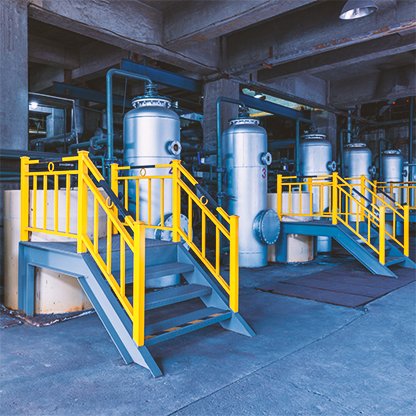
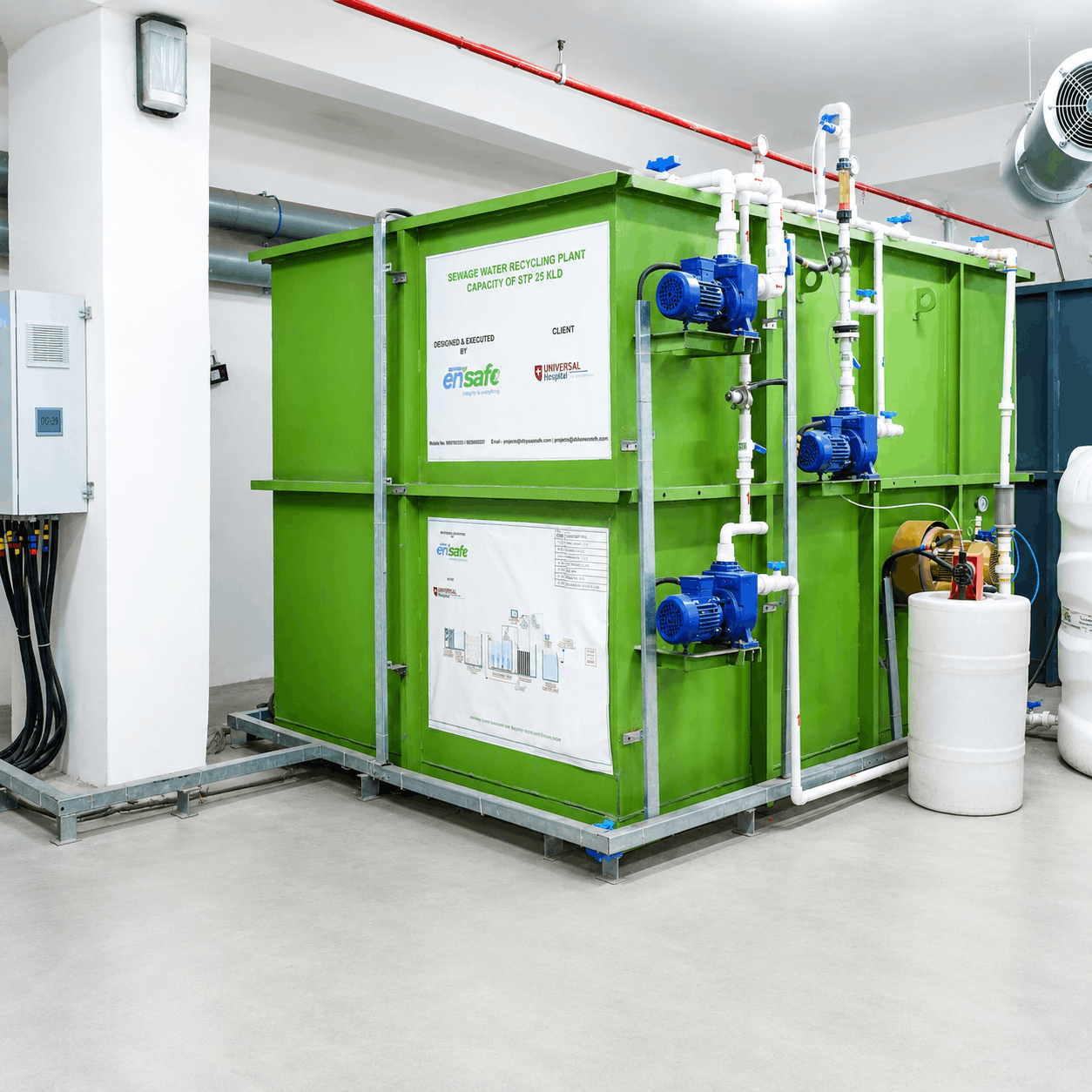
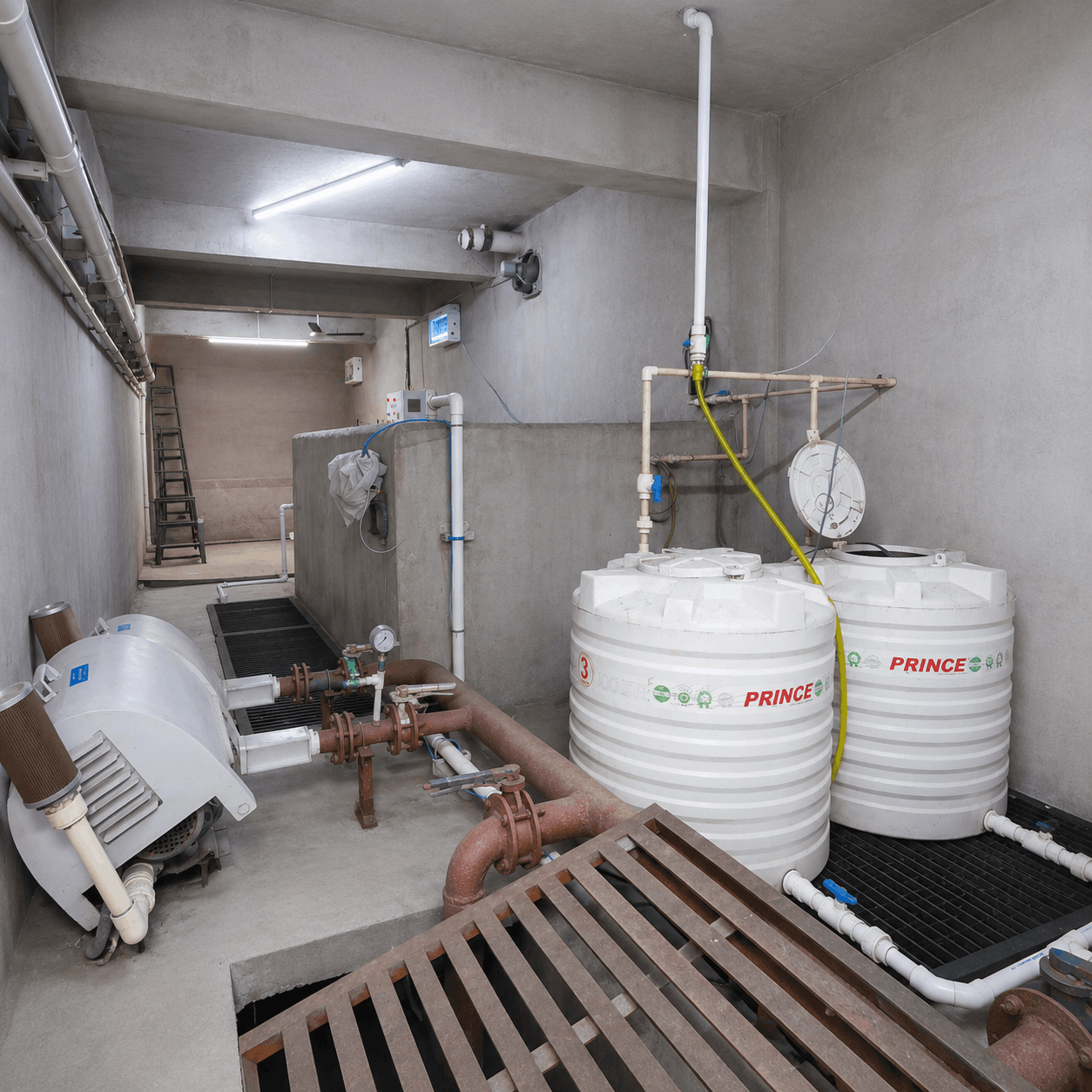
At Nitya Ensafe, we provide integrated STP, ETP, WTP, and Water Reuse Solutions specially designed for hospitals. Based on our experience in 25+ hospital projects and 20+ crore litres of wastewater recycled, our systems ensure efficient treatment, reliable disinfection, and sustainable water management.
Our integrated approach focuses on:
- Advanced Biological Treatment for efficient removal of organic pollutants.
- High-Efficiency Filtration for improved treated water quality.
- Robust Disinfection for effective pathogen reduction and safe water reuse.
- Integrated Water Management with proper STP & ETP segregation, optimized hydraulic design, and better management of RO reject and hardness.
- Fully Automated PLC-Based Operation for reliable 24×7 performance with minimal manpower and low operating costs.
Key Features
- Integrated STP & ETP design
- Advanced biological treatment, filtration & disinfection
- Fully automated PLC-based operation
- Compact, odor-free & silent design
- Stable performance under variable loads
- High-quality treated water for reuse
- Energy-efficient & low O&M cost
- GPCB/CPCB compliant design
- Turnkey execution with AMC & O&M support
Why Choose Nitya Ensafe?
- Specialized expertise in hospital wastewater treatment.
- Integrated STP, ETP, and water reuse solutions.
- Experience with hospitals, multispeciality hospitals, medical colleges, and healthcare campuses.
- Customized engineering for each healthcare facility.
- End-to-end support from design and installation to commissioning, validation, compliance, AMC, and long-term O&M.
- Reliable systems designed for uninterrupted 24×7 hospital operations.
Build Safer & Sustainable Healthcare Facilities
Effective hospital wastewater management begins with proper planning—not just treatment. By implementing an integrated STP + ETP + Water Reuse solution, healthcare facilities can achieve regulatory compliance, protect public health, reduce freshwater consumption, improve operational efficiency, and build a sustainable healthcare infrastructure for the future.
Project Gallery
Build Safer & Sustainable Healthcare Facilities.