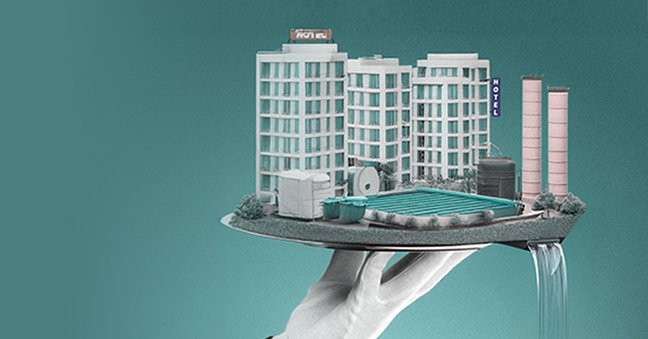
Hotels generate sewage and wastewater every day from guest rooms, washrooms, restaurants, commercial kitchens, banquet halls, laundry areas, staff facilities and other utilities. Because the flow and pollution load can change sharply with occupancy, events and seasonal demand, a hotel sewage treatment plant must be designed around real operating conditions rather than only average daily flow.
Nitya Ensafe develops customized STP and water reuse solutions for hotels, resorts and hospitality properties. The objective is to deliver stable treatment, reduce freshwater dependence, support environmental compliance and create a reliable source of treated water for suitable non-potable applications.
Why Hotels Need a Properly Designed STP
A well-planned hotel STP is part of the property's overall water-management strategy. It can help:
- Treat domestic sewage generated across rooms, restaurants, kitchens and staff areas.
- Support applicable SPCB/CPCB and local environmental compliance requirements.
- Recover treated water for flushing, landscaping, gardening and selected utility uses.
- Reduce dependence on municipal water, borewell water and tanker supply.
- Improve water efficiency in high-occupancy hospitality projects.
- Support sustainable building and hospitality initiatives.
- Reduce operational risk caused by overloaded or poorly integrated treatment systems.
Common Wastewater Challenges in Hotels
01
Sudden Hydraulic Loads from Banquets and Restaurants
Banquet events, conferences, restaurants and high guest occupancy can create sudden peaks in wastewater flow. If the STP is sized only on average flow, retention time can fall, tanks may overflow and biological treatment can become unstable. Equalization and peak-load planning are essential for consistent performance.
02
Oil, Grease and Food Waste from Kitchens
Kitchen and restaurant wastewater can contain fats, oils, grease and food residues. Without proper grease management and pre-treatment, these contaminants may create scum, foul odour, pipeline blockages and poor biological treatment. Kitchen streams should be assessed separately before they enter the main STP.
03
High Ammoniacal Nitrogen Load
Hotels with restaurants, banquet areas and high urinal usage can experience elevated nitrogen loading. The biological process should be selected and operated to support reliable nitrogen removal where required, including appropriate anoxic treatment.
04
High TDS and RO Reject Entering the STP
Many hotels use borewell water, softeners and RO systems. Sending high-salinity RO reject directly into a biological STP can affect process stability and reduce reuse potential. Raw water treatment, RO reject and sewage treatment should therefore be planned as an integrated water system.
05
Limited Space and Poor Utility Planning
In both new and operating hotels, utility space is often limited. Deep underground tanks, difficult maintenance access and inadequate equipment layout can create long-term operational problems. Compact treatment systems need to be designed without compromising hydraulics, ventilation or serviceability.
06
Expansion of Existing Hotels
Adding rooms, restaurants or banquet facilities increases wastewater generation. An existing STP may become overloaded if capacity and process requirements are not reassessed. Upgradation should consider present occupancy, peak events and future expansion.
Nitya Ensafe's Hotel STP Solution
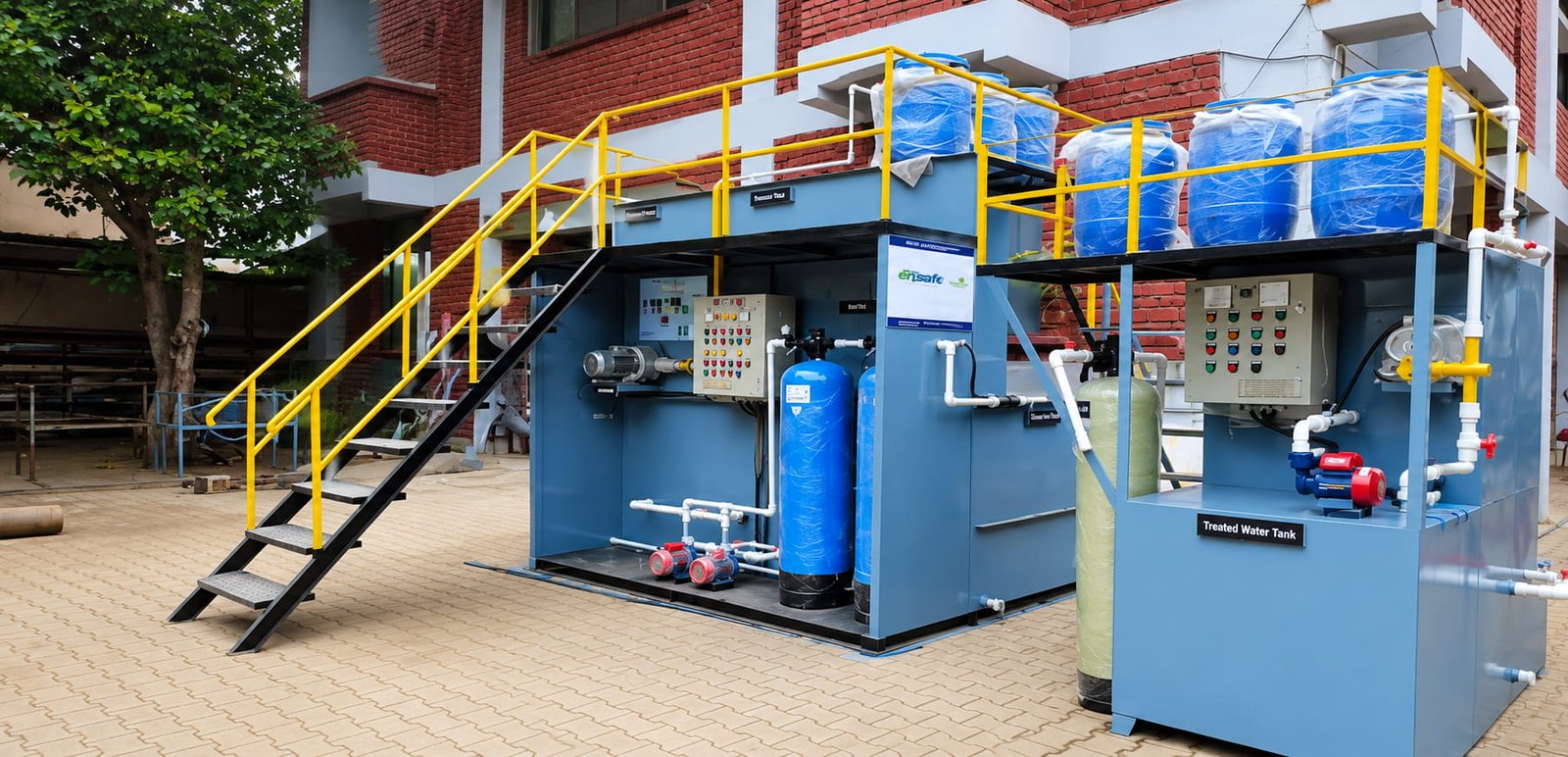
Our hotel-specific approach considers water source, occupancy pattern, kitchen loads, banquet peaks, laundry wastewater, space constraints, reuse requirements and existing utility systems before finalizing the treatment process.
- Customized STP design for hotels, resorts and hospitality developments.
- Hydraulic equalization for variable occupancy and event-related peak loads.
- Effective oil and grease management for kitchen wastewater.
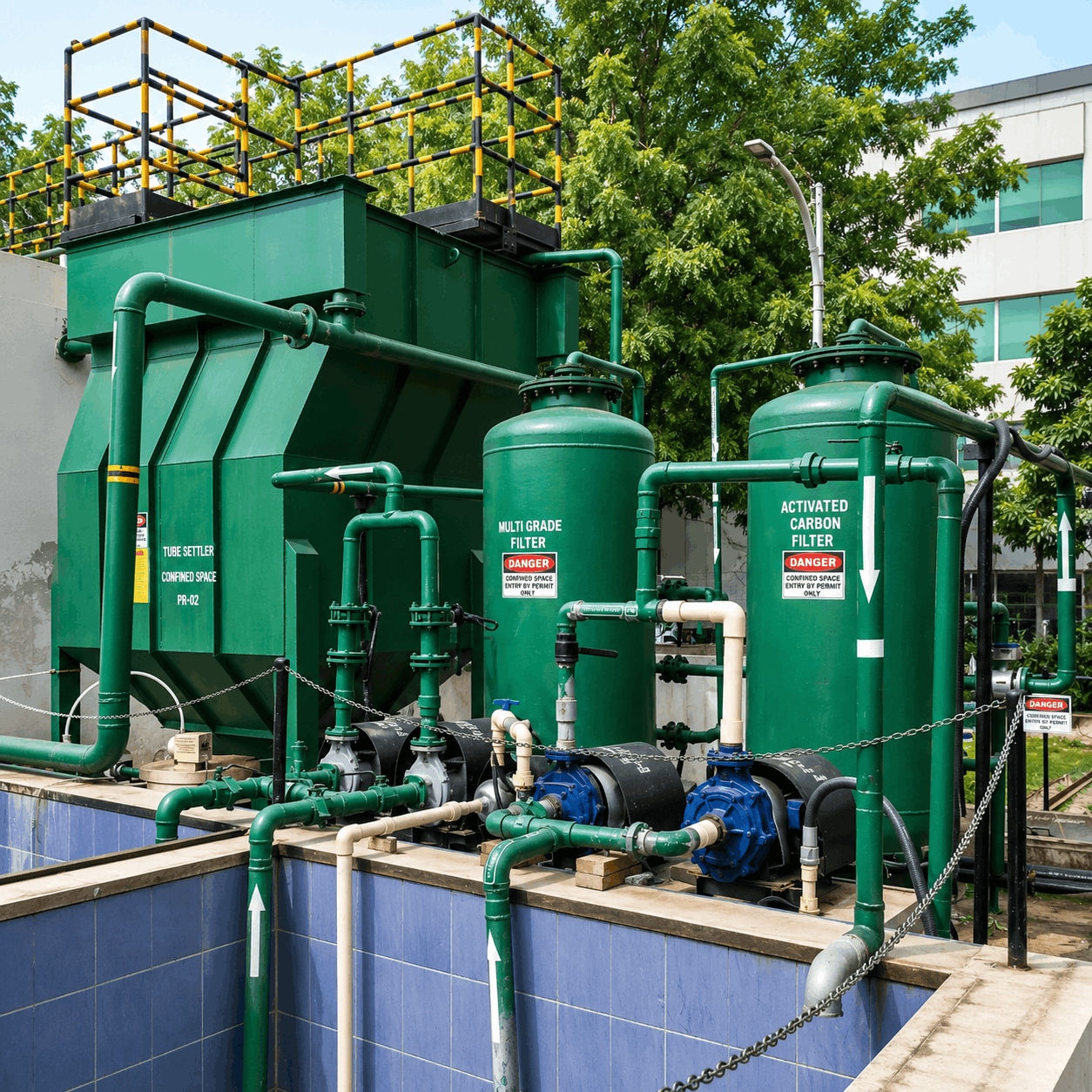
- Advanced biological treatment with nitrogen-management provisions where required.
- Integration with WTP, softener and RO systems.
- Automated PLC-based operation with reduced manual dependency.
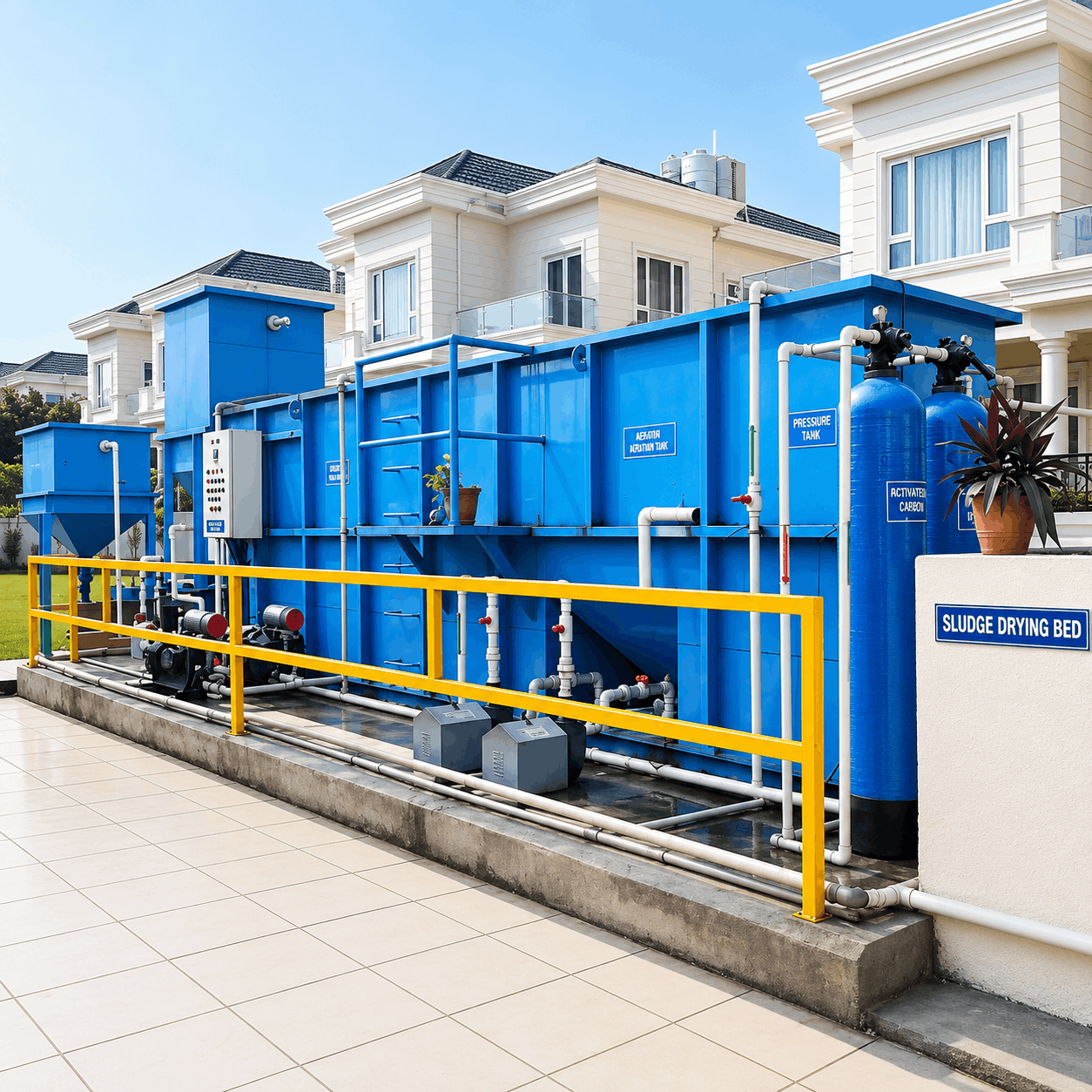
- Compact, low-noise and odour-controlled design.
- Treated water suitable for selected reuse applications after required polishing.
- Energy-conscious equipment selection and optimized operating cost.
- SPCB/CPCB-aligned engineering based on applicable project requirements.
- Turnkey design, supply, installation, commissioning, AMC and O&M support.
Water Reuse Opportunities for Hotels
Treated sewage should be considered a recoverable water resource. Depending on final water quality and site requirements, treated water can be planned for:
- Toilet flushing.
- Gardening and landscaping.
- Cooling tower make-up after suitable tertiary treatment, where applicable.
- Floor washing and selected housekeeping utilities.
- Other approved non-potable applications.
A proper reuse network, treated-water storage and dual plumbing strategy are as important as the STP itself.
Why Choose Nitya Ensafe for Hotel Wastewater Treatment?
Nitya Ensafe focuses on process-specific engineering rather than a standard package plant. We evaluate the complete hotel water cycle so that the STP works with the property's raw-water treatment, kitchen operations, reuse network and future expansion plan. Our team supports both greenfield hotel projects and upgrades of existing plants that face odour, high operating cost, inconsistent outlet quality or hydraulic overloading.
Water-Efficient Hospitality
Build a More Water-Efficient Hospitality Property
A reliable hotel sewage treatment plant should protect daily operations while creating long-term water savings and environmental value. Nitya Ensafe can assess your hotel's wastewater profile, existing utilities and reuse goals to develop a practical STP and water-management solution built for real hospitality conditions.
Discuss Your Hotel STP Requirement With Nitya Ensafe